📝 Content Marketing: A Complete Guide to Building Brands, Trust, and Business Growth

🔹 Introduction to Content Marketing

  • Content marketing is a strategic marketing approach focused on creating and distributing valuable, relevant, and consistent content.

  • The main goal is to attract and retain a clearly defined audience.

  • It helps businesses build trust and long-term relationships.

  • Content marketing does not directly sell; it educates and informs.

  • It encourages customers to take profitable actions naturally.

🔹 What is Content Marketing?

  • Content marketing means creating useful information for your audience.

  • The content can be:

    • Blog posts

    • Videos

    • Social media posts

    • Podcasts

    • Infographics

    • Emails

  • It focuses on solving customer problems.

  • It builds authority and credibility.

🔹 Importance of Content Marketing

  • Builds brand awareness

  • Increases website traffic

  • Generates leads

  • Improves customer loyalty

  • Boosts conversions

  • Supports SEO efforts

🔹 Key Objectives of Content Marketing

  • Educate audience

  • Engage users

  • Build trust

  • Generate leads

  • Increase sales

  • Improve brand image


🔹 Core Elements of Content Marketing

  • Clear goals

  • Target audience

  • Quality content

  • Distribution channels

  • Consistency

  • Performance measurement


🔹 Types of Content Marketing

📌 Blog Content

  • Educational articles

  • How-to guides

  • Listicles

  • Case studies

📌 Video Content

  • Tutorials

  • Product demos

  • Explainer videos

📌 Social Media Content

  • Posts

  • Reels

  • Stories

  • Live videos

📌 Visual Content

  • Infographics

  • Images

  • Slides

📌 Audio Content

  • Podcasts

  • Audio blogs

📌 Interactive Content

  • Quizzes

  • Polls

  • Surveys


🔹 Benefits of Content Marketing

  • Low-cost marketing strategy

  • Long-term results

  • Builds authority

  • Improves engagement

  • Increases conversions


🔹 Content Marketing vs Traditional Marketing

Traditional Marketing

  • Push-based

  • Interruptive

  • Expensive

Content Marketing

  • Pull-based

  • Non-interruptive

  • Cost-effective


🔹 Understanding Your Target Audience

  • Identify customer needs

  • Understand pain points

  • Study behavior

  • Analyze demographics

  • Create buyer personas


🔹 Buyer Persona

  • Fictional representation of ideal customer

  • Includes:

    • Age

    • Gender

    • Interests

    • Problems

    • Goals


🔹 Content Marketing Strategy

  • Define goals

  • Identify audience

  • Choose content types

  • Select platforms

  • Create content calendar

  • Measure performance


🔹 Content Planning

  • Brainstorm topics

  • Keyword research

  • Create outlines

  • Set deadlines


🔹 Content Creation Process

  • Research topic

  • Write draft

  • Edit content

  • Add visuals

  • Optimize for SEO


🔹 Content Distribution Channels

  • Website

  • Social media

  • Email newsletters

  • YouTube

  • Podcasts


🔹 SEO and Content Marketing

  • Use keywords naturally

  • Optimize headings

  • Add internal links

  • Improve readability

  • Create quality backlinks


🔹 Evergreen Content

  • Content that stays relevant for long time

  • Examples:

    • How-to guides

    • Tutorials

    • FAQs


🔹 Trending Content

  • Based on current trends

  • News-based

  • Short lifespan


🔹 Content Repurposing

  • Convert blogs into videos

  • Convert videos into posts

  • Convert podcasts into articles


🔹 Content Marketing Funnel

Awareness Stage

  • Blogs

  • Videos

Consideration Stage

  • Ebooks

  • Webinars

Decision Stage

  • Case studies

  • Testimonials


🔹 Storytelling in Content Marketing

  • Connect emotionally

  • Use real-life examples

  • Keep audience engaged


🔹 Content Marketing Tools

  • Google Analytics

  • SEMrush

  • Canva

  • Grammarly

  • HubSpot


🔹 Measuring Content Marketing Performance

  • Website traffic

  • Engagement rate

  • Conversion rate

  • Time on page

  • Bounce rate


🔹 Common Content Marketing Mistakes

  • Inconsistent posting

  • Poor quality content

  • Ignoring SEO

  • Not promoting content


🔹 Content Calendar

  • Schedule content

  • Maintain consistency

  • Avoid last-minute rush


🔹 Social Media Content Strategy

  • Choose platforms

  • Post regularly

  • Engage with audience

  • Analyze performance


🔹 Email Content Marketing

  • Welcome emails

  • Newsletters

  • Promotional emails


🔹 Video Content Marketing

  • Short-form videos

  • Long-form videos

  • Live streaming


🔹 Blogging Best Practices

  • Catchy headlines

  • Clear structure

  • Use bullet points

  • Add visuals


🔹 Content Optimization

  • Update old posts

  • Improve headlines

  • Add new information


🔹 User-Generated Content

  • Reviews

  • Testimonials

  • Social posts


🔹 Influencer Content Marketing

  • Collaborate with influencers

  • Reach new audiences


🔹 Content Marketing for Small Businesses

  • Start with blogs

  • Focus on SEO

  • Use social media


🔹 Content Marketing for E-commerce

  • Product guides

  • Reviews

  • How-to content


🔹 Content Marketing Trends

  • AI content creation

  • Voice search content

  • Interactive content


🔹 Role of AI in Content Marketing

  • Topic ideas

  • Writing assistance

  • SEO optimization


🔹 Ethical Content Marketing

  • Avoid plagiarism

  • Be transparent

  • Provide real value


🔹 Building Content Authority

  • Consistent posting

  • High-quality research

  • Expert opinions


🔹 Long-Term Value of Content Marketing

  • Content becomes digital asset

  • Brings traffic continuously


🔹 Content Marketing and Branding

  • Builds brand voice

  • Strengthens identity


🔹 Multilingual Content Marketing

  • Reach global audience

  • Localized content


🔹 Content Marketing KPIs

  • Organic traffic

  • Leads

  • Sales

  • Engagement

🔹 Content Promotion Strategies

  • Social sharing

  • Email campaigns

  • Paid promotion

🔹 Content Marketing Workflow

  • Plan → Create → Publish → Promote → Measure

🔹 Content Quality Factors

  • Originality

  • Relevance

  • Accuracy

  • Readability

🔹 Content Marketing Challenges

  • Time-consuming

  • Competition

  • Measuring ROI

🔹 Overcoming Challenges

  • Use tools

  • Automate tasks

  • Outsource if needed

🔹 Content Marketing and Customer Trust

  • Helpful content builds trust

  • Trust leads to loyalty

🔹 Future of Content Marketing

  • More personalization

  • More video

  • More AI assistance

🔹 Conclusion

  • Content marketing is essential for modern businesses.

  • It helps attract, engage, and convert customers.

  • With the right strategy, content marketing delivers long-term success.

  • Businesses that focus on valuable content will stay ahead of competition.
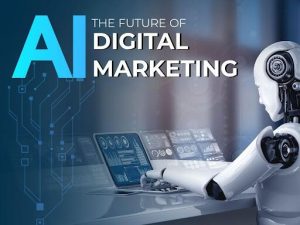
🚀 AI-Powered Digital Marketing: How Artificial Intelligence is Transforming the Future of Online Growth


AI with Digital Marketing: Transforming the Future of Online Growth

What Is AI in Digital Marketing?

  • Use of AI technologies in marketing processes

  • Machines that learn from data

  • Predict customer behavior

  • Optimize marketing campaigns

  • Personalize user experiences

  • Improve targeting accuracy


🎯 Why AI Is Important in Digital Marketing

  • Handles large data volumes

  • Provides real-time insights

  • Reduces human errors

  • Saves time and cost

  • Improves campaign performance

  • Increases ROI


📈 Key Objectives of AI-Powered Marketing

  • Increase conversions

  • Improve customer experience

  • Automate marketing operations

  • Enhance personalization

  • Predict future trends

  • Optimize budgets


🧠 Core AI Technologies Used in Marketing

  • Machine Learning

  • Natural Language Processing (NLP)

  • Computer Vision

  • Predictive Analytics

  • Chatbots

  • Recommendation Engines


📊 AI-Driven Data Analysis

  • Collects massive data

  • Identifies patterns

  • Predicts trends

  • Generates actionable insights

  • Improves decision-making


🧩 AI in Customer Segmentation

  • Automatic audience grouping

  • Behavior-based segments

  • Interest-based segmentation

  • Real-time updates

  • Personalized targeting


🎯 AI-Powered Targeting

  • Predictive audience targeting

  • Lookalike modeling

  • Intent-based targeting

  • Cross-channel targeting

  • Retargeting automation


📝 AI in Content Marketing

  • Content idea generation

  • AI-written blogs

  • Headline optimization

  • Grammar and tone improvement

  • Content personalization


✍️ AI Content Creation Benefits

  • Faster production

  • Consistent quality

  • Cost-effective

  • Scalable content

  • Data-backed topics


🎨 AI in Visual Content Creation

  • Image generation

  • Video creation

  • Thumbnail design

  • Automatic resizing

  • Brand style matching


🔍 AI in SEO

  • Keyword research

  • Search intent analysis

  • Content optimization

  • Technical SEO audits

  • Rank tracking


📢 AI in Paid Advertising

  • Automated bidding

  • Smart budget allocation

  • Ad copy generation

  • Audience targeting

  • Performance prediction


🧠 AI in Social Media Marketing

  • Post scheduling

  • Caption generation

  • Trend identification

  • Best time to post

  • Sentiment analysis


💬 AI Chatbots in Marketing

  • 24/7 customer support

  • Lead qualification

  • Personalized conversations

  • Instant responses

  • Data collection


🛍️ AI in E-Commerce Marketing

  • Product recommendations

  • Dynamic pricing

  • Abandoned cart recovery

  • Personalized emails

  • Inventory forecasting


📧 AI in Email Marketing

  • Personalized subject lines

  • Send-time optimization

  • Automated campaigns

  • Behavior-triggered emails

  • A/B testing


🔄 Marketing Automation with AI

  • Workflow automation

  • Lead nurturing

  • Customer journey mapping

  • Campaign optimization

  • CRM integration


📊 Predictive Analytics in Marketing

  • Forecast sales

  • Predict churn

  • Identify high-value customers

  • Optimize lifetime value

  • Reduce risk


🧪 AI in A/B Testing

  • Automatic test creation

  • Real-time optimization

  • Winner selection

  • Continuous improvement


📍 AI in Personalization

  • Personalized website content

  • Product recommendations

  • Personalized ads

  • Dynamic landing pages


🧾 AI in Customer Experience (CX)

  • Journey analysis

  • Pain point detection

  • Experience optimization

  • Satisfaction prediction


🛠️ Popular AI Marketing Tools

  • AI content tools

  • AI SEO tools

  • AI ad tools

  • AI chatbots

  • Analytics platforms


🔐 Data Privacy & Ethics in AI Marketing

  • Transparent data usage

  • Consent management

  • Avoid bias

  • Secure customer data


⚠️ Challenges of AI in Digital Marketing

  • High initial cost

  • Data dependency

  • Learning curve

  • Privacy concerns

  • Over-automation risk


🧠 Human + AI Collaboration

  • AI assists humans

  • Humans provide creativity

  • Strategic control by humans

  • Balanced approach


🔮 Future Trends of AI in Marketing

  • Voice search optimization

  • Visual search

  • Hyper-personalization

  • Emotion AI

  • AI-powered video marketing


🏆 Benefits of AI with Digital Marketing

  • Faster execution

  • Better targeting

  • Higher ROI

  • Improved customer satisfaction

  • Competitive advantage


📌 Best Practices for Using AI in Marketing

  • Start with clear goals

  • Choose right tools

  • Monitor performance

  • Combine with human creativity

  • Keep testing and optimizing


🚀 Building an AI-Powered Digital Marketing Strategy

  • Identify use cases

  • Select AI tools

  • Train team

  • Integrate systems

  • Measure results


🌐 AI Across Digital Marketing Channels

  • AI in SEO

  • AI in SMM

  • AI in PPC

  • AI in Email

  • AI in Content

  • AI in CRO


🧩 Case Use Scenarios

  • Lead generation automation

  • Personalized campaigns

  • Smart ad targeting

  • Chatbot-driven sales

  • Predictive recommendations


🏁 Conclusion: AI as the Future of Digital Marketing

  • AI is transforming marketing

  • Businesses must adopt AI

  • Early adopters gain advantage

  • Continuous learning is key

  • AI-driven marketing is the future

Mastering SEO for Online Success

E-Commerce SEO: The Ultimate Growth Strategy for Online Stores

  • E-commerce SEO focuses on optimizing online stores to rank higher in search engines

  • Helps attract organic traffic without relying only on paid ads

  • Builds long-term visibility and brand trust

  • Improves product discoverability

  • Increases conversions and sales

  • Reduces customer acquisition cost

  • Creates a competitive advantage


🔍 What Is E-Commerce SEO?

  • Optimization of product pages, category pages, and store structure

  • Targets buyers with high purchase intent

  • Combines technical SEO, content SEO, and conversion optimization

  • Focuses on user experience and search engine guidelines

  • Aligns store content with customer search behavior

Continue reading

The Power of Search Engine Optimization in Digital Marketing

 SEO FUNDAMENTALS

  • What is Search Engine Optimization

  • Core Objectives of SEO

  • White Hat SEO vs Black Hat SEO

  • Grey Hat SEO Explained

  • On-Page SEO Overview

  • Off-Page SEO Overview

  • Technical SEO Overview

  • Local SEO Overview

  • Ecommerce SEO Overview

  • Mobile SEO Overview

KEYWORD RESEARCH

  • Importance of Keyword Research

  • Understanding Search Intent

  • Types of Keywords

  • Short-Tail Keywords

  • Long-Tail Keywords

  • Commercial vs Informational Keywords

  • Transactional Keywords

  • Navigational Keywords

  • Keyword Difficulty

  • Keyword Volume Analysis

KEYWORD RESEARCH PROCESS

  • Brainstorming Seed Keywords

  • Using Keyword Research Tools

  • Analyzing Competitor Keywords

  • Finding Low-Competition Keywords

  • Identifying High-Intent Keywords

  • Grouping Keywords by Topic

  • Creating Keyword Maps

  • Choosing Primary Keywords

  • Choosing Secondary Keywords

  • Avoiding Keyword Cannibalization

📝 ON-PAGE SEO

  • Optimizing Title Tags

  • Writing SEO-Friendly Meta Descriptions

  • Proper Use of Header Tags

  • Keyword Placement Best Practices

  • URL Structure Optimization

  • Internal Linking Strategy

  • Image Optimization

  • Alt Text Optimization

  • Content Length Optimization

  • Content Readability

📄 CONTENT OPTIMIZATION

  • Creating High-Quality Content

  • Content for Humans First

  • Matching Content with Search Intent

  • Using LSI Keywords

  • Avoiding Keyword Stuffing

  • Creating Evergreen Content

  • Updating Old Content

  • Content Freshness Signals

  • Adding Multimedia Content

  • Structuring Content for SEO

  • TECHNICAL SEO

  • Website Crawlability

  • Indexability

  • XML Sitemap Optimization

  • Robots.txt Configuration

  • Website Speed Optimization

  • Core Web Vitals

Digital Marketing Course: A Complete Guide to Building a Successful

Introduction to Digital Marketing Course

  • world

  • Businesses are shifting from traditional marketing to online platforms to reach a wider and more targeted audience

  • A digital marketing course is designed to teach individuals how to promote brands, products, and services using digital channels

  • This course covers various online marketing strategies such as SEO, social media marketing, paid advertising, content marketing, and analytics

  • Whether you are a student, working professional, entrepreneur, or freelancer, a digital marketing course opens doors to countless opportunities

  • With the rapid growth of the internet and smartphones, digital marketing skills are in high demand across industries

  • A structured digital marketing course helps you learn both theoretical concepts and practical implementation

  • This blog explains everything you need to know about a digital marketing course in detail


What is Digital Marketing?

  • Digital marketing refers to promoting products or services using digital platforms and technologies

  • It involves reaching customers through online channels where they spend most of their time

  • Digital marketing focuses on measurable, data-driven strategies

  • It allows businesses to target specific audiences based on interests, behavior, location, and demographics

  • Digital marketing is cost-effective compared to traditional marketing methods

  • It provides real-time results and performance tracking

  • Digital marketing helps build brand awareness, generate leads, and increase sales

  • The digital marketing ecosystem is continuously evolving with new tools and trends


What is a Digital Marketing Course?

  • A digital marketing course is a structured training program that teaches online marketing skills

  • The course includes both basic and advanced digital marketing concepts

  • It is designed to make learners industry-ready

  • Digital marketing courses focus on practical learning through live projects and case studies

  • The course helps learners understand how digital platforms work

  • It teaches how to create, manage, and optimize marketing campaigns

  • Digital marketing courses can be online, offline, or hybrid

  • Certification is usually provided after successful completion


Why Choose a Digital Marketing Course?

  • Digital marketing is one of the fastest-growing career fields

  • Every business, from startups to multinational companies, needs digital marketers

  • High demand for skilled digital marketing professionals

  • Flexible career options such as freelancing, full-time jobs, and entrepreneurship

  • Opportunity to work with global clients

  • Continuous learning and growth opportunities

  • Competitive salary packages

  • Creative and analytical career combination


Who Should Enroll in a Digital Marketing Course?

  • Students looking to build a future-ready career

  • Working professionals who want to upgrade their skills

  • Business owners aiming to grow their online presence

  • Entrepreneurs planning to launch digital-first businesses

  • Freelancers seeking high-paying online work

  • Marketing professionals transitioning from traditional to digital marketing

  • Career switchers exploring new opportunities

  • Anyone interested in learning online marketing strategies


Digital Marketing Course Curriculum Overview


Fundamentals of Digital Marketing

  • Introduction to digital marketing concepts

  • Difference between traditional marketing and digital marketing

  • Understanding online consumer behavior

  • Overview of digital marketing channels

  • Importance of digital presence for businesses

  • Digital marketing funnel explanation

  • Role of digital marketing in business growth


Search Engine Optimization (SEO)

  • Introduction to search engines and how they work

  • Importance of SEO in digital marketing

  • Types of SEO: On-page, Off-page, and Technical SEO

  • Keyword research techniques

  • SEO tools and software

  • On-page optimization techniques

  • Off-page SEO strategies like link building

  • Technical SEO basics such as site speed and mobile optimization

  • Local SEO for location-based businesses

  • SEO analytics and performance tracking


Search Engine Marketing (SEM) and Google Ads

  • Introduction to paid advertising

  • Difference between SEO and SEM

  • Understanding Google Ads platform

  • Types of Google Ads campaigns

  • Keyword bidding strategies

  • Ad copywriting techniques

  • Landing page optimization

  • Budget planning and campaign setup

  • Conversion tracking

  • Performance analysis and optimization