🔹 Introduction: AI Meets Digital Marketing
Artificial Intelligence (AI) is no longer a futuristic concept—it is now a core part of digital marketing. Businesses today rely on AI-driven technologies to understand customers, personalize experiences, automate tasks, and improve marketing performance.
AI in digital marketing means using machine learning, data analytics, natural language processing (NLP), and automation to:
-
Analyze large amounts of data
-
Predict customer behavior
-
Create personalized content
-
Improve decision-making
AI helps marketers work smarter, faster, and more efficiently.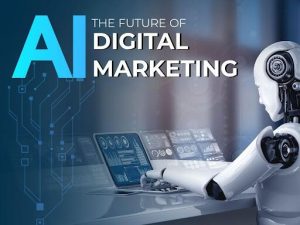 🔹 What is Artificial Intelligence (AI)?
-
AI refers to machines that can perform tasks requiring human intelligence
-
These tasks include:
-
Learning from data
-
Recognizing patterns
-
Understanding language
-
Making decisions
-
Key Components of AI:
-
Machine Learning (ML)
-
Natural Language Processing (NLP)
-
Computer Vision
-
Deep Learning
-
Predictive Analytics
🔹 What is Digital Marketing?
Digital marketing is the promotion of products and services using digital channels such as:
-
Websites
-
Search Engines
-
Social Media
-
Email
-
Mobile Apps
-
Online Ads
Main objectives of digital marketing:
-
Increase brand awareness
-
Generate leads
-
Drive website traffic
-
Improve conversions
-
Build customer relationships
🔹 Why AI is Important in Digital Marketing
-
Processes massive data quickly
-
Reduces human errors
-
Improves personalization
-
Saves time and cost
-
Enhances customer experience
-
Boosts ROI
AI allows marketers to move from guesswork to data-driven strategies.
🔹 Benefits of AI in Digital Marketing
✅ Automation
-
Automates repetitive tasks
-
Reduces manual effort
-
Improves efficiency
✅ Personalization
-
Delivers customized content
-
Shows relevant ads
-
Improves customer engagement
✅ Better Targeting
-
Identifies ideal customers
-
Segments audiences accurately
-
Improves campaign results
✅ Data-Driven Decisions
-
Analyzes real-time data
-
Provides actionable insights
-
Improves planning
✅ Cost Efficiency
-
Reduces wasted ad spend
-
Optimizes budget allocation
🔹 AI in Customer Data Analysis
AI helps analyze customer data such as:
-
Browsing behavior
-
Purchase history
-
Search patterns
-
Social media activity
Outcomes:
-
Understand customer preferences
-
Predict future actions
-
Build accurate customer profiles
🔹 AI-Powered Personalization
Personalization is one of the biggest advantages of AI.
AI can:
-
Show product recommendations
-
Send personalized emails
-
Customize website content
-
Adjust ads based on user behavior
Examples:
-
Amazon product suggestions
-
Netflix movie recommendations
-
Spotify playlists
🔹 AI in Search Engine Optimization (SEO)
AI improves SEO through:
-
Keyword research
-
Content optimization
-
Voice search optimization
-
Search intent analysis
AI SEO Capabilities:
-
Identify high-ranking keywords
-
Analyze competitor strategies
-
Suggest content improvements
-
Predict ranking changes
🔹 AI in Content Marketing
AI supports content creation and optimization.
AI Can:
-
Generate blog ideas
-
Write drafts
-
Optimize headlines
-
Check grammar
-
Suggest keywords
Benefits:
-
Faster content production
-
Consistent quality
-
Better engagement
🔹 AI in Social Media Marketing
AI enhances social media performance by:
-
Scheduling posts
-
Analyzing engagement
-
Recommending best posting times
-
Identifying trending topics
AI Helps With:
-
Social listening
-
Sentiment analysis
-
Influencer discovery
🔹 AI in Email Marketing
AI improves email campaigns through:
-
Subject line optimization
-
Personalized email content
-
Automated follow-ups
-
Predictive sending times
Results:
-
Higher open rates
-
Better click-through rates
-
Increased conversions
🔹 AI Chatbots and Virtual Assistants
Chatbots are AI-powered tools that:
-
Answer customer queries
-
Provide product information
-
Assist with purchases
-
Offer 24/7 support
Benefits:
-
Instant responses
-
Lower support costs
-
Improved customer satisfaction
🔹 AI in Paid Advertising (PPC)
AI optimizes paid ads by:
-
Adjusting bids automatically
-
Testing ad variations
-
Identifying best-performing ads
-
Targeting right audience
Platforms Using AI:
-
Google Ads
-
Facebook Ads
-
Instagram Ads
-
LinkedIn Ads
🔹 AI in Predictive Analytics
Predictive analytics uses AI to:
-
Forecast trends
-
Predict sales
-
Estimate customer lifetime value
-
Anticipate churn
Advantages:
-
Better planning
-
Reduced risks
-
Increased profitability
🔹 AI in Conversion Rate Optimization (CRO)
AI improves conversions by:
-
Testing landing pages
-
Analyzing user behavior
-
Suggesting layout changes
-
Improving UX
🔹 AI in Marketing Automation
Marketing automation platforms powered by AI:
-
Manage campaigns
-
Track leads
-
Score prospects
-
Nurture customers
Popular Uses:
-
Drip campaigns
-
Lead nurturing
-
Workflow automation
🔹 AI Tools for Digital Marketing
Some popular AI tools:
-
ChatGPT – Content generation
-
Jasper – Copywriting
-
HubSpot – Marketing automation
-
SEMrush – SEO analysis
-
Canva AI – Design
-
Hootsuite – Social scheduling
🔹 AI in E-commerce Marketing
AI helps e-commerce businesses:
-
Recommend products
-
Predict demand
-
Manage inventory
-
Optimize pricing
Benefits:
-
Higher sales
-
Better customer experience
-
Reduced returns
🔹 AI in Voice Search Optimization
AI supports voice search by:
-
Understanding conversational queries
-
Optimizing long-tail keywords
-
Improving local SEO
🔹 AI in Video Marketing
AI improves video marketing by:
-
Editing videos
-
Adding captions
-
Personalizing content
-
Analyzing viewer behavior
🔹 AI in Influencer Marketing
AI helps:
-
Identify relevant influencers
-
Analyze engagement quality
-
Detect fake followers
🔹 Ethical Considerations of AI in Marketing
Important ethical aspects:
-
Data privacy
-
Transparency
-
Consent
-
Avoiding bias
Businesses must use AI responsibly.
🔹 Challenges of AI in Digital Marketing
-
High implementation cost
-
Data security risks
-
Skill gaps
-
Dependence on technology
🔹 How to Implement AI in Digital Marketing
Step-by-step approach:
-
Identify business goals
-
Choose suitable AI tools
-
Train team members
-
Integrate with existing systems
-
Monitor performance
🔹 Skills Needed for AI-Driven Marketers
-
Data analysis
-
Basic AI knowledge
-
SEO understanding
-
Content strategy
-
Automation tools
🔹 Future of AI in Digital Marketing
Expected trends:
-
Hyper-personalization
-
Voice and visual search growth
-
Smarter chatbots
-
Fully automated campaigns
-
AI-driven creative design
🔹 AI vs Traditional Digital Marketing
Traditional Marketing:
-
Manual work
-
Generic messaging
-
Limited personalization
AI Marketing:
-
Automated processes
-
Personalized experiences
-
Predictive insights
🔹 Why Businesses Should Adopt AI Now
-
Stay competitive
-
Improve customer experience
-
Increase revenue
-
Reduce costs
-
Scale faster
🔹 AI and Small Businesses
AI is not only for big companies.
Small businesses can use AI to:
-
Create content
-
Manage social media
-
Run ads
-
Analyze data
🔹 Case Example (Simple)
A business using AI can:
-
Track website visitors
-
Show personalized offers
-
Send automated emails
-
Convert more customers
🔹 Best Practices for AI in Digital Marketing
-
Use quality data
-
Test regularly
-
Keep human oversight
-
Focus on customer value
🔹 AI + Human Creativity = Success
AI handles:
-
Data
-
Automation
-
Optimization
Humans handle:
-
Strategy
-
Creativity
-
Emotional connection
Both together create powerful marketing.
🔹 Conclusion
Artificial Intelligence is revolutionizing digital marketing by making campaigns smarter, faster, and more effective. From personalized content and predictive analytics to chatbots and automation, AI empowers businesses to connect with customers in meaningful ways.
Companies that embrace AI today will lead the digital marketplace tomorrow.